
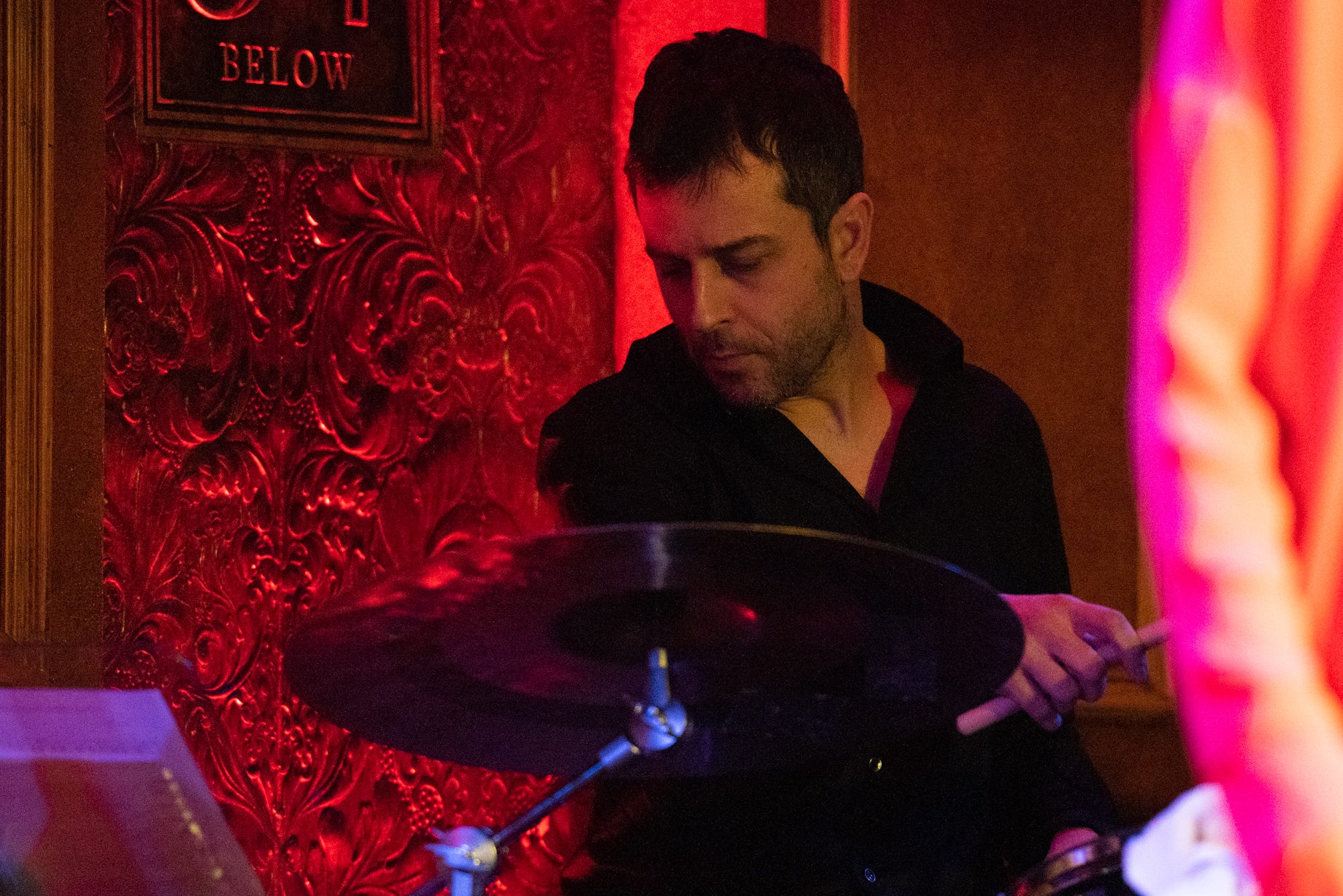
Jill is acting in a play out of town, which means we’ll be apart for periods of time. Which is fine. In the old days, we were often apart, flying off to do this or that, a movie or a play out of town. We didn’t think twice about it. We were working – hallelujah! But the old days actually weren’t the old days -- they were the young days. These are the old days, and we’re not as nimble as we used to be. We’ve grown to rely on each other for certain things. I take care of this; she takes care of that; together we take care of the other. These touchstones remind us who we are to each other as the days flit by. When we were young, we didn’t need touchstones. We never gave a thought to the length of our days in those days.
So, Jill is acting in a play, which is what she should be doing. Did I already say that? I mean, she’s a wonderful actor, and she should be out there doing it. And she is. And my role is to support her in every way – take care of the home-front; drive down to New Jersey to spend a night or two with her; cook some dishes that she loves and bring them when I come. And then stay out of her way. She’s working. I’ve played the role before -- and I’ve got it down.
This play she’s doing – a very fine play by a very fine playwright – is about a therapist and her patient -- and Jill is the therapist and this therapist is in an ever-deepening crisis. And I’ll remind you again – Jill is a very good actor, which means that she’s going to inhabit this woman, and this woman is going to inhabit her in ways that will take her farther away. Farther even than New Jersey.
So, we’ll be apart for periods of time while Jill completely inhabits the psyche of this therapist in crisis, and I find myself unsettled. I mean, not all the time; there are things about solitary living that I like. I enjoy the freedom of lying on the couch with my book whenever I please. That’s great. I very much like cooking for myself. I’ll probably spend more time writing, but not necessarily writing better. Something’s off. The rhythm’s off. There’s a rhythm that thrums around the two of us, and when it’s not there, nothing’s really right.
A lot of this has to do with getting older. I mean, we’re doing fine. We’re lucky. No big crises. Just leaks here and there. Leaks in the systems because the systems are getting old. A broken tooth; a kidney stone; a cranky colon; a murmuring heart. And so it goes.
We’ve become each others’ caretakers. We’ve taken on the job of keeping each other alive and exuberant for as long as we can stretch it out. My caretaking job is easy because she takes very good care of herself. Her job is more challenging because my focus is on enjoying every moment I can before I can’t any more. Strangely, these two seemingly diverse paths work well together. There’s a frisson that keeps us on our toes.
It’s the totality of her that I miss. The totality being the sum of her particularities, the list of which seems to expand daily. Jill has more epiphanies than most people, and it took me years to give these epiphanies their proper due. I looked up the word – it means, “a sudden manifestation or perception of the essential nature or meaning of something.” And that’s exactly what they are. All of which means that our life is continually expanding, and I get to go along for the ride. She is now, for example, a jazz drummer. And she’s not just farting around with it; she’s in the barn, paradiddling away three hours a day. Did I mention that we have a barn? And that it’s Jill’s?
I miss her morning apprehensions, which she sometimes wakes me with. My morning state is fairly fuzzy to begin with. I’m usually trying to hold onto a dream, which is often not a pleasant dream, but I’m holding onto it because if I don’t, I’ll have to admit that I really can’t remember fuck-all any more – especially dreams, which love to dance just outside my remembering, sticking their tongues out at me as they fade away. Fucking dreams.
I miss when she leaves me with my morning obsessions – my coffee, my crossword, my second crossword – going off to the barn to indulge in her morning obsessions – her yoga, her Pilates, her meditation. When she’s away, she can’t leave me with my morning obsessions and go to the barn because she’s in New Jersey. And I miss it.
And I miss when she returns from the barn and shares her newest insight, which will inevitably alter the direction of our life. Sometimes an almost imperceptible change of direction, but a change to be reckoned with nonetheless. So, our lives keep changing, which is quite something, actually. Sometimes I even initiate the change. It’s easier when I do. But it’s sexier when she does.
She calls me every night after her show to tell me about the evening’s performance and then about the latest of her epiphanies, which now occur in New Jersey.
“I want to have a jazz jam in the barn.”
“When?”
“When Max and Megan come.”
Our son, Max, and his splendid wife, Megan are flying in from Portland, Oregon in a couple of weeks. Also, Megan’s mom, Jen. This is Max’s new family, and Jill has invited them to come and see her in the play.
“Why do you do this?” I ask.
“What?”
“You’re doing a play that is emotionally and physically exhausting, and you’re doing a brilliant job of it. That’s what you’re doing. Not throwing parties in the barn, not hosting relatives. Just do the fucking play.”
“It’s not a party. It’s a jam.”
I say nothing.
“I had a vision of Max playing in the barn on my new drum set with some fabulous players. It’s going to be incredible.”
So this is not an idea; it’s a vision that has already manifested in her mind. I should get off her case. It’s her job to protect her performance, it’s her exhaustion, it’s her son and her drum set. Yes, he’s my son, too, but she’s his mother.
“Okay,” I say.
“I called the rabbi,” she says, “and he’s up for it.”
And that calls for an explanation.
There’s a jazz jam every Thursday night at the VFW hall in Westport. We go whenever we possibly can. It’s the brainchild of Greg Wall – known locally as The Jazz Rabbi. He’s a brilliant saxophone player, and he’s played with some of the best in the business. And he’s a rabbi.
Max, our son, is a professional drummer in Portland and a very fine one; Megan is a professional singer-songwriter and jazz violinist, and she is also very fine. Jill, who has always been fine, has been studying drums with her son for about eight years now. On Zoom. She’s also in a jazz trio that gets together in the barn whenever they can. On keyboard is Dorothy, who is in real life a prominent attorney; Jill’s on the drum kit; and they’ve hired a ringer -- Rich Zurkowsky, a fabulous professional bass player, who lifts the proceedings to a higher level.
I should also point out that the barn is a 1791 gem that has been beautifully restored, fully-insulated and has under-floor heating. When we first saw it, we gasped at its perfection. For our daughter Alison’s wedding nine years ago, we strung little lights around the beams and around the railings of the upper studio spaces that transform the barn into a glittering jewel box as the sun sets. The barn is very cool.
So, a jazz jam in the barn. Right in the middle of the run of her show, which plays Thursdays through Sundays. She’ll do a performance Thursday night, two shows on Friday, two on Saturday and a matinee on Sunday, after which she’ll drive three hours to get home. On Monday, Max, Megan and Jen arrive at our house, and on Tuesday, we’ll have the jam in the barn.
“How many people?” I ask.
“Four. Max on drums; Rabbi Greg on Sax; Rich Zurkowsky – my Rich -- on bass; and the rabbi got Kenny Wessel on guitar. He played for years with Ornette Coleman! It’s going to be awesome.”
“No audience?” Of course there’ll be an audience. We’re actors.
“”I’m making a list. Maybe eight couples – maybe ten --something like that.”
“Food? Drink?”
“Just drinks and nibbles. I’ll tell everybody to have dinner before they come.”
“We’ll need tables and chairs.”
“Really?”
“I think so. People need a place to put down their drink. We’ll make a little night club. I’ll call the rental place we used for Alison’s wedding. We’ll get, like, five round tables? With red tablecloths? Four chairs each? Will that do it?”
“If we have more people, we can use the kitchen table.”
“That’s gonna be the bar.”
“Right.”
“I’m on it.”
“It’ll be great.”
“It will.”
The musicians arrive first. They take their time unpacking, setting up, shooting the breeze, talking about other musicians they’ve played with, getting a beer. Rabbi Greg has his tenor sax hanging around his neck; Rich is standing behind his bass, fine tuning; Max is at the drum set, brushes in his hands; then sticks; then brushes again. He’s ready to go. They’re swapping stories. Kenny is still hooking up his amp, checking the volume. A couple of our friends arrive, pick out a table and get themselves some wine. After a discussion among the musicians about Jaki Byard, a jazz legend I had never heard of, Max does a flourish on the snare drum, and gives a shy smile to Greg, who puts his sax to his lips and plays the opening bars of Moon Ray, a tune that the Roy Haines Quartet made famous. Rich picks up on the bass. Max switches to the brushes, and jazz happens. Just like that. A thrill runs through the room. Kenny is calmly finishing up with his amp, smiling, nodding his head to the music. When he’s good and ready, he picks up his guitar and joins in. Nobody had said what tune they were going to play, or what key it would be in, or at what tempo. It was as if the song had been brought into being at that moment, and we witnessed the miracle of its birth.
More friends drift in and each one, in turn, registers the quality of the music. Whatever they were expecting of the evening has been exceeded. They find a table, get something to drink, greet their friends, while the musicians take turns soloing; then each one trades eight bar solos with the drummer, who also happens to be our son.
There’s applause after the number – jazz applause, which traditionally sounds a bit sparse. Jill goes over to Rabbi Greg and tells him that she’s waiting to introduce the musicians until a few more people arrive.
“Actually,” says Greg, “the audience outnumbers the band. For jazz musicians, this is a very successful night.”
That gets a nice laugh from the crowd.
“There’s a story about Matt Wilson,” says Kenny, the guitarist. “He’s a great drummer – and he was giving a talk at one of those Jazz Educator Conferences -- about audiences and how musicians relate to them, and at one point he said to them, ‘You know, jazz musicians play with the same level of intensity, commitment, passion and love for the music whether they‘re playing for six people or whether they’re playing for nine people.”
That gets a bigger laugh from the crowd. Things are loosening up. Things have loosened up. Kenny looks at Greg.
“What are we doin?”
Greg shrugs.
Kenny softly warbles, “Doo doo doo, da doo doo.”
Greg nods, and Kenny does it again, snapping his fingers to indicate the tempo. Then he counts to four, snapping his fingers, and the four musicians begin the tune with perfect precision and attack, as if they had rehearsed it for weeks.
By the end of the number, most of the audience has arrived, and Jill gets up and introduces each member of the band, ending with, “… and this is my son, Max Tucker.”
Enthusiastic cheers and shouts from the crowd.
She’s flushed with joy.
“You know,” says Rabbi Greg to the audience, “I’ve been hearing about Max Tucker since I’ve known Jill and Mike. They’re huge fans of jazz; they come all the time, and they always said, ‘you’ve got to hear Max.’ And we’re just meeting for the first time tonight. But with this music, it’s like we’re all branches of the same tree, so that we can instantly come here and play together. So, Max, this is great. This is the way to meet.”
“And it’s mother’s dream,” says Jill to cheers. I’m sitting there in the crowd, alone at my little table, and all I could think of was how unbelievably beautiful she was. How unbelievably beautifully she is. If this were a movie, the camera would now cut to a close-up of my face, gazing at her in abject adoration. Fade to black.
Beautiful ❤️